left biblioblography

Wednesday, November 29, 2006

EARTH AS A NON-ISOLATED SYSTEM

Stumbled across this link at the Bacon Eating Atheist Jew’s blog (this was a month or so ago), and felt compelled to share it:

“Getting closer to the cosmic connection to climate
04.10.2006
An essential role for remote stars in everyday weather on Earth has been revealed by an experiment at the Danish National Space Center in Copenhagen.
It is already well-established that when cosmic rays, which are high-speed atomic particles originating in exploded stars far away in the Milky Way, penetrate Earth’s atmosphere they produce substantial amounts of ions and release free electrons. Now, results from the Danish experiment show that the released electrons significantly promote the formation of building blocks for cloud condensation nuclei on which water vapour condenses to make clouds.


Hence, a causal mechanism by which cosmic rays can facilitate the production of clouds in Earth’s atmosphere has been experimentally identified for the first time.The Danish team officially announce their discovery on Wednesday in Proceedings of the Royal Society A, published by the Royal Society, the British national academy of science.The experimentThe experiment called SKY (Danish for ‘cloud’) took place in a large reaction chamber which contained a mixture of gases at realistic concentrations to imitate the chemistry of the lower atmosphere. Ultraviolet lamps mimicked the action of the Sun’s rays. During experimental runs, instruments traced the chemical action of the penetrating cosmic rays in the reaction chamber.The data revealed that electrons released by cosmic rays act as catalysts, which significantly accelerate the formation of stable, ultra-small clusters of sulphuric acid and water molecules which are building blocks for the cloud condensation nuclei. A vast numbers of such microscopic droplets appeared, floating in the air in the reaction chamber. “

What’s my point? It’s great ammo for the next argument you have with an ID advocate (because they usually posit from the angle that planet earth is an isolated system, when obviously it is not). I have spoken of this elsewhere, and bring it up, time and again: we are not a pocket of isolation, at least from the perspective of interaction between planets. Is the universe isolated? We won’t know until we get up and out there, to walk the stars, pinch the dust of a million worlds between our thumbs and forefingers, and perhaps breathe deeply of another atmosphere (or several others).

So while our planet may not be the crux of the universe, there are small inroads here and there, so tiny or sporadic that we miss them when we blink or are too busy chatting or engaged in that act of simply being human:
The universe is wild, wooly, and deep. Or, as Hamlet put it: “There are more things in Heaven and Earth, Horatio, than is dreamt of in your philosophy.”

Till the next post then.

Read More...

Saturday, November 25, 2006

FOOD FOR THOUGHT: A NEW PHILOSOPHER HAS CAUGHT MY EYE…OR RATHER, AN OLD ONE

One Ludwig Andreas Feuerbach, to be precise. He’s new to me: but he lived circa 1804–1872.

“German philosopher and anthropologist whose major work, The Essence of Christianity (1841), maintains that religion and divinity are projections of human nature.

“(Born July 28, 1804, Landshut, Bavaria-died Sept. 13, 1872, Rechenberg, Ger.) German philosopher. The son of an eminent jurist, he studied under G.W.F. Hegel in Berlin but later abandoned Hegelian idealism for a naturalistic materialism. In Thoughts on Death and Immortality (1830), he attacked the concept of personal immortality. His Abelard and Heloise (1834) and Pierre Bayle (1838) were followed by On Philosophy and Christianity (1839), in which he claimed, “Christianity has in fact long vanished not only from the reason but from the life of mankind.” In The Essence of Christianity (1841), he proposed that God is merely the outward projection of mankind's inward nature. Some of his views were later endorsed by Karl Marx and Friedrich Engels.”

Let me qualify some items further, before we venture on:


  1. Feuerbach stipulates in his preface that “But in considering this subject in the first instance, I was under the necessity of treating it as a matter of science, of philosophy; and in rectifying the aberrations of Religion, Theology, and Speculation, I was naturally obliged to use their expressions, and even to appear to speculate, or – which is the same thing – to turn theologian myself, while I nevertheless only analyse speculation, i.e., reduce theology to anthropology . My work, as I said before, contains, and applies in the concrete, the principle of a new philosophy suited – not to the schools, but – to man. Yes, it contains that principle, but only by evolving it out of the very core of religion; hence, be it said in passing the new philosophy can no longer, like the old Catholic and modern Protestant scholasticism, fall into the temptation to prove its agreement with religion by its agreement with Christian dogmas; on the contrary, being evolved from the nature of religion, it has in itself the true essence of religion, – is, in its very quality as a philosophy, a religion also. But a work which considers ideas in their genesis and explains and demonstrates them in strict sequence, is, by the very form which this purpose imposes upon it, unsuited to popular reading.”
That is for the kibitzers in the audience, who will undoubtedly take issue with the usages of ‘God’, or the capitilization of religion, or any other references to which the book refers. Sadly, we get shackled by those who take umbrage at our efforts: ‘Why do you quote scripture, if you don’t believe?’ or ‘Using such-and-such language indicates a nod to the divine’ or other such folderol.
  1. Most astute readers will tag him as a Marxian philosopher, and thus, allegorically (or sophistically) infer that both he and I are neo-Marxists (as one such twit at One Cosmos tried to insist). Note that last sentence: ‘Some of his views were later endorsed’ (see above). Also, his work here is on a Marxist site. I most emphatically am not a communist/socialist/marxist, regardless of the popular misconception. As I told a fellow at work (a fellow named Alex, who is a secular Jew, who began explaining he was more of ‘Socialist Democrat’), “Communism’s a great idea, if people knew how to share.”

Now that that particular bugaboo’s been laid to rest, shall we continue?

A few choice quotes, to wet the palate:

Religion is the dream of the human mind. But even in dreams we do not find ourselves in emptiness or in heaven, but on earth, in the realm of reality; we only see real things in the entrancing splendor of imagination and caprice, instead of in the simple daylight of reality and necessity.

If therefore my work is negative, irreligious, atheistic, let it be remembered that atheism -- at least in the sense of this work -- is the secret of religion itself; that religion itself, not indeed on the surface, but fundamentally, not in intention or according to its own supposition, but in its heart, in its essence, believes in nothing else than the truth and divinity of human nature.

A note from Chapter One caught my eye:
”The uninspired materialist says: “Man is distinguished from the animal only by consciousness; he is an animal, but one possessing consciousness in addition.” He does not take into account that a being that awakes to consciousness is thereby qualitatively changed. Moreover, what we have just said is by no means intended to belittle the animal. This is not the place to go deeper into this question.”

From Chapter Two:

”RELIGION is the disuniting of man from himself; he sets God before him as the antithesis of himself God is not what man is – man is not what God is. God is the infinite, man the finite being; God is perfect, man imperfect; God eternal, man temporal; God almighty, man weak; God holy, man sinful. God and man are extremes: God is the absolutely positive, the sum of all realities; man the absolutely negative, comprehending all negations.

But in religion man contemplates his own latent nature. Hence it must be shown that this antithesis, this differencing of God and man, with which religion begins, is a differencing of man with his own nature.

“The inherent necessity of this proof is at once apparent from this, – that if the divine nature, which is the object of religion, were really different from the nature of man, a division, a disunion could not take place. If God is really a different being from myself, why should his perfection trouble me? Disunion exists only between beings that are at variance, but who ought to be one, who can be one, and who consequently in nature, in truth, are one. On this general ground, then, the nature with which man feels himself in disunion must be inborn, immanent in himself, but at the same time it must be of a different character from that nature or power which gives him the feeling, the consciousness of reconciliation, of union with God, or, what is the same thing with himself.”

From Chapter Three:

”A God, therefore, who expresses only the nature of the understanding does not satisfy religion, is not the God of religion. The understanding is interested not only in man, but in the things out of man, in universal nature. The intellectual man forgets even himself in the contemplation of nature. The Christians scorned the pagan philosophers because, instead of thinking, of themselves, of their own salvation, they had thought only of things out of themselves. The Christian thinks only of himself. By the understanding an insect is contemplated with as much enthusiasm as the image of God – man. The understanding is the absolute indifference and identity of all things and beings. It is not Christianity, not religious enthusiasm, but the enthusiasm of the understanding that we have to thank for botany, mineralogy, zoology, physics, and astronomy. The understanding is universal, pantheistic, the love of the universe; but the grand characteristic of religion, and of the Christian religion especially, is that it is thoroughly anthropo-theistic, the exclusive love of man for himself, the exclusive self-affirmation of the human nature, that is, of subjective human nature; for it is true that the understanding also affirms the nature of man, but it is his objective nature, which has reference to the object for the sake of the object, and the manifestation of which is science. Hence it must be something entirely different from the nature of the understanding which is an object to man in religion, if he is to find contentment therein, and this something will necessarily be the very kernel of religion.”

From Chapter Four:

“For religion – the religious man in the act of devotion believes in a real sympathy of the divine being in his sufferings and wants, believes that the will of God can be determined by the fervour of prayer, i.e., by the force of feeling, believes in a real, present fulfilment of his desire, wrought by prayer. The truly religious man unhesitatingly assigns his own feelings to God; God is to him a heart susceptible to all that is human. The heart can betake itself only to the heart; feeling can appeal only to feeling; it finds consolation in itself, in its own nature alone.

“The notion that the fulfilment of prayer has been determined from eternity, that it was originally included in the plan of creation, is the empty, absurd fiction of a mechanical mode of thought, which is in absolute contradiction with the nature of religion. “We need,” says Lavater somewhere, and quite correctly according to the religious sentiment, “an arbitrary God.” Besides, even according to this fiction, God is just as much a being determined by man, as in the real, present fulfilment consequent on the power of prayer; the only difference is, that the contradiction with the unchangeableness and unconditionedness of God – that which constitutes the difficulty – is thrown back into the deceptive distance of the past or of eternity. Whether God decides on the fulfilment of my prayer now, on the immediate occasion of my offering it, or whether he did decide on it long ago, is fundamentally the same thing.

“It is the greatest inconsequence to reject the idea of a God who can be determined by prayer, that is, by the force of feeling, as an unworthy anthropomorphic idea. If we once believe in a being who is an object of veneration, an object of prayer, an object of affection, who is providential, who takes care of man, – in a Providence, which is not conceivable without love, – in a being, therefore, who is loving, whose motive of action is love; we also believe in a being who has, if not an anatomical, yet a psychical human heart. The religious mind, as has been said, places everything in God, excepting that alone which it despises. The Christians certainly gave their God no attributes, which contradicted their own moral ideas, but they gave him without hesitation, and of necessity, the emotions of love, of compassion. And the love, which the religious mind places in God, is not an illusory, imaginary love, but a real, true love. God is loved and loves again; the divine love is only human love made objective, affirming itself. In God love is absorbed in itself as its own ultimate truth.”

So, let’s nutshell this (hey, see how flexible language is? I just used a noun as a verb!):

Man is God. Man simply took his own best attributes, and used them to cast his own shadow upon the universe, an effort to tailor reality to suit his own needs.

Discuss among yourselves.

Read More...

Friday, November 24, 2006

DINING WITH ALIENS

Turkey day has come and gone (thankfully), and as the song goes, “Still I wonder…?”

Sometimes I wonder if I was adopted. Am I related to these people? It almost makes me want to be a prayin’ man, on occasion. “PLEASE, gawd, tell me I’m no kin o’ these!”

We used to brag that we were dysfunctional prior to when it was trendy, but the current crops of dysfunctionality make us seem tame by comparison (albeit we are a tad louder than most).

My brother-in-law, after a few beers, begins to pick my brain on subjects religious (of course, the loosening of inhibition flows onwards, and before you know it, via the quaffing of far too many ales, somehow my rejection of the existence of a soul translates into nuking the entire Middle East: he’s a Republican in a drunken state of bully pulpit – whoever shouts loudest is right).

Honestly, he’s a terrible debater. And it’s by far much more difficult to have a reasonable debate with people when they don’t allow you to finish your sentences, and decibel level is synonymous with reason.

We managed to argue (shout, really) about numerous topics that swung wildly across the spectrum: I managed to discuss my support of gay marriage, upon which he said (shouted) about how it would ‘undermine his marriage to my sister’, and my little sis, to her credit, stood up and said ‘let them get married. Who cares?’

(I managed to toss a nice bon mot in: He began to rant about it at the dinner table, at which I replied: “If you were married to a man, you might drink less.” General hilarity ensued).

Meanwhile, my elder sister (whose life has apparently taken a turn for the worse: I’d thought she was doing well – we’re not a tight family) decided to drown her depression in alcohol (treating depression with a depressant – that’s smart, yes it is) alternated between sleeping and screaming at my equally drunken brother-in-law about the Shrub (but of course, he dragged Clinton into the criticism – did I say he was a terrible debater? Yes, I did) to the point where we all just stopped trying to mitigate the imbroglio, and went out for a smoke.

I was steamed at my little sis, because earlier I’d told my brother-in-law about the fight we’d had about my praying at the holidays last year (Surprise! She got the whole thing wrong!), and how I just wanted to be excused from it. So when the crucial moment came, she’s asking me to join in (I was trying to bow out), to his credit, brother-in-law chimed in with “Hey, he doesn’t have to participate if he doesn’t want to.” I did after all (she pleaded), but I was steamed. So as we left the screaming match, she asked: “Are we cool?”, I said no. She explained on the porch (with the shouting in the background audible through the walls) that she wanted to avoid the questions, and I got the go-ahead to discuss it with my nephew.

A few words on this:
My nephew is a sweet, odd little guy (actually, he’s almost as big as I am now, heightwise) who is autistic, varying from ‘slightly’ to ‘highly functional’. Somehow, somewhere, he picked up the prayer thing: nobody apparently knows how – they never go to church, aren’t traditionally religious in any sense, outside the lip service. So he’s adopted this in the last few years. I’m a little flattered that I got the go-ahead to speak to him about it – he’s family, but not my kid – but a little irked that she’s had a whole year to prep the kid, and hasn’t. He’s not a social critter, but he can communicate somewhat what he means. He usually comes out, says hi, and goes back to whatever it was that has had his focus prior.

The names have been omitted to protect the strident.

There you have it. The briefest of glimpses into the bedlam that I was born into. We have had some truly memorable holiday moments (remind me to tell you about the time I gave an inflatable love doll to one of my brothers-in-law for Xmas –that was a Kodak moment, I tell ya!) – our family functions are decided failures if not one person is hollering, weeping, or generally incensed.

I love my family, but oy gevalt! There are moments that hermitage sounds like a great idea.

Or, as some wit (I forget whom) once said: “Of course your family can push your buttons. They installed them!”

Hope your holidays were as equally…memorable.

Till the next post then.

Read More...

Monday, November 20, 2006

BITCHSLAP BLOGGING – OF COMMUNICATION, CACOPHONY AND THE COMEDY OF ERRORS

There is some major disconnects that I’ve found via blogging: debating those of unlike mind seems to be a Sisyphean task in most cases.

There are, for instance, only so many times one can re-explain the definition of ‘theory’ prior to bursting a blood vessel, or re-iterating the factual evidence of evolution. Or demand proof of the insubstantial. Before the eyes cross, and the knees go wobbly.

There is also the issue of establishing a premise. Most of us (myself included) usually wing it. Presuppositions firmly in place, we go toe-to-toe with the opposite side, and as a rule, it becomes a stalemate, an impasse.


There are multiple constraints in the realtime world as well. We forget often enough, that the other side, as we do, have other obligations in reality. Work, relationships, duties demanding to be done. As such, these demands will take us away from any debate. The other side will on occasion substitute silence with assent, declare victory prematurely, or simply wonder why the opponent is silent. Conveniently forgetting that there are other matters to attend to. Easily done: the opponent could very well be two continents away, called away on family matters, dealing with the multitude of duties that adult life burdens us with.

Sometimes, for myself, I lose interest in the discussion: I’ll drop a discussion due to the fact that beating a dead horse is usually a waste of time. Or, if the other poster insists on being verbose to the nth degree, I just don’t feel obliged to respond in-depth via fisking the entire response, and so have to resort to pulling a few choice comments, and responding to those. Context dropping isn’t a favorite hobby of mine, nor is the strawman approach: I endeavor mightily to avoid them both like the plague, but alas, being human, I fumble. As do we all.

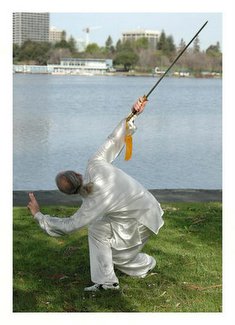
Like most Americans, my attention span is very much tattered, due to the prevalence of the ‘glass teat’, as Harlan Ellison likes to dub it. While I’d like to think that I’ve abbreviated much of that via my embracing the practice of Tai Chi (which requires a degree of focus that my fellow citizenry evidently don’t possess), again, only human, and I do get distracted (I watch NUMB3RS on Friday nights, PDT, so don’t expect a lot that weeknight), enough so that I shrug, and move on to the next glittery object that attracts my notice, like a crow to tinsel.

Then there is the matter of who ‘won’ the debate. It’s usually decided by the audience, lacking an objective judge, as to who defeated whom (the Barker-Manata debate is a substantial proof of this: the atheists side with Barker, the religionists siding with Manata).

Then there is the issue of projection, definition number 8 –

  1. “The attribution of one's own attitudes, feelings, or suppositions to others: “Even trained anthropologists have been guilty of unconscious projection—of clothing the subjects of their research in theories brought with them into the field” (Alex Shoumatoff).
  2. The attribution of one's own attitudes, feelings, or desires to someone or something as a naive or unconscious defense against anxiety or guilt.”

Or the old ‘You’re just like me, you just won’t admit it!’ defense. Being human, we all share commonalites: I am by far going to put running to the bathroom, getting my car fixed, eating my dinner, or going to work as a priority as opposed to dispensing a passionate logical argument to another poster’s commentary. Whether or not I ‘believe’ is an entirely subjective opinion I’ve reserved for myself, thanks much, so please don’t pigeonhole me by projecting your own mindset onto mine. History abounds with this mistake: don’t make it.

And of course, there are multiple moments where I feel I’ve adequately described my position for the umpteenth time, and yet no amount of explanation seems to reach the person in question. These tend to slip into acrimony, despite my best efforts.

Let’s put this in a nutshell: the people we agree with will applaud, the folks we disagree with will boo loudly. Short of the actual admission of an epiphany, the best anyone can hope for is a meeting of the minds, a dialogue, an exchange of views. I have had the occasional appearance of victory: long-term or short-term, it’s difficult to judge. Today’s victory can sour with tomorrow’s advent. The human mind is notoriously ambiguous.

“Of course, I like agreement, it warms the heart, but I don't expect it; and I like disagreement too, when it is intelligent and carries a thought further, rather than contradicts it a priori, from a different point of departure. These different points of departure make discussion futile and unpleasant.”
To Charles Augustus Strong, 15 September 1939, The Letters of George Santayana, Book Six, 1937-1940, MIT Press, 2004

Scepticism is the chastity of the intellect, and it is shameful to surrender it too soon or to the first comer: there is nobility in preserving it coolly and proudly through a long youth, until at last, in the ripeness of instinct and discretion, it can be safely exchanged for fidelity and happiness. “
Scepticism and Animal Faith, Scribner's, 1923, p. 69-70

Read More...

Sunday, November 19, 2006

THE WHISPER OF OLD GHOSTS…

“I'll be coming again like an old dog in pain
Blown through the eye of the hurricane
Down to the stones where old ghosts play.” – Jethro Tull, Old Ghosts, Stormwatch

Here is a samskara made sacrament, filial piety made foolish, and the use of history as a method to instill fear rather than provide a cautionary tale to learn from.

We are told that we require old ghosts to whisper in our ears: left to our own devices, we shall inevitably fail: that unless we pay heed to the dead letters of our forbears, the flames shall crackle, and brimstone will sear our nostrils.

There is much to be learned from history. Santiago’s oft-repeated aphorism springs to mind. But Time, like knowledge, is like a river flowing – the eddies change, the banks narrow or widen, and nothing is ever the same as it was before.

But the course of the river has changed – it alters even as you read this. The topology has undergone that one immutable fact of our existence: change.

We build on the past, longing toward the future, our palates wettened by the present. We are in some respects, beholden to the past: it gives structure, it provides foundation, it gives us a small insight into what has gone before, and patterns of predictability to ease the journey.

But blind obeisance? Never. Forgone rules of ancestral worship writ large? They must go into the dustbins of history. Inequality? There should be none. Elitism? It is a level playing field for one and all, unless there is harm inferred and harm incurred. Water seeks its own level.

So close the ear to the whisper of old ghosts – they are but the illusions spun by men as they crouched ‘round the campfire, giving their own faces to the sounds outside the circle of light.

The campfires are gone, in most places, replaced by orbs of light. Those who fear the darkness build walls – let the masonry built by ancient tomes come crumbling downward.

It is, as I have illustrated before, only natural that humanity ascends. So up we go. Into the light.

And it is okay to watch the old gods play. I do it all the time. I simply just enjoy the dancing of wraiths insubstantial. But by no means shall I join the waltz – I seek that more novel of approaches: that of reality.

Till the next post then.

“In the wee hours I’ll meet you
Down by dun ringill ---
Oh, and we’ll watch the old gods play
By dun ringill.” - Jethro Tull, Dun Ringill, Stormwatch

Read More...

Tuesday, November 14, 2006

SEEKING ALLIES IN A HOSTILE WORLD

This article caught my eye: title is GOD’S COUNTRY

It discusses much of the standard folderol put forth by the Talibangelists in this country, but it throws a mean curve ball, thus:

(Snip)
” One problem with this view is that a large number of evangelical Christians don't live in the Bible Belt. Another is that many of them aren't white. Some years ago, the Chilean-born photographer Camilo José Vergara began taking pictures of places like La Sinagoga, a Latino church located in a run-down neighborhood of junkyards and metal shops in Brooklyn, and Emmanuel Baptist Rescue Mission, which is situated on a corner of Skid Row, Los Angeles, where drug dealers ply their trade. The photographs in Vergara's richly documented, visually arresting book, How the Other Half Worships, illustrate how indelibly religious most poor minority communities in America are, not least because in many blighted urban neighborhoods churches are the only viable institutions around. Trekking through the back streets and barrios of twenty-one different cities, Vergara spots churches tucked away in former warehouses, nightclubs, five-and-dime stores, movie theaters, car dealerships, hotels and slaughterhouses. Some are sandwiched between crumbling buildings on desolate blocks. Others lack steeples, crosses, choir platforms, even bathrooms, yet nevertheless bring residents together in lively, often frenzied services where worshipers shake, dance, speak in tongues, sing, weep, wail, fall to their knees, and pray for deliverance and God's grace.
(Snip)
“Before rushing to assume such people are Bush supporters, it's worth noting that there is no evidence the more pious members of minority groups have been drifting into the ranks of the GOP. In fact, the opposite may be true. As sociologists Andrew Greeley and Michael Hout point out in their new book, The Truth About Conservative Christians, the most devout African-Americans--those who read the Bible daily and view it as the "word of God"--were also those most likely to support Democrats in the 1992-2000 presidential elections. The same religious zeal that pushes some whites to the right, in other words, leads blacks in the opposite direction, and not only at the polling booth. A generation ago, it was churchgoing black people who spearheaded the civil rights movement, a faith-based struggle that historians like David Chappell have likened to a religious revival.”
(Snip)
“How, Greeley and Hout ask, do pundits routinely equate biblical Christianity with right-wing politics when African-Americans, "who are in nearly every respect as religiously conservative as whites," nevertheless "vote overwhelmingly for Democrats?" By, it appears, mistakenly assuming all Bible-believing Christians are reactionary white Southerners who write monthly checks to the likes of Jerry Falwell. As a survey by Religion & Ethics Newsweekly found, a majority of evangelicals actually hold an unfavorable view of Falwell. A large number appear to care more about jobs and the economy than issues like gay marriage and abortion.”
(Snip)
“Then as now, Neuhaus wrote as if he were speaking for a silent majority against the unaccountable elites, a claim so pervasive these days that Americans who are prochoice, support stem-cell research and don't actually believe the judiciary should be abolished might well assume they're vastly outnumbered. But they're not. The Neuhauses of the world are right that the United States is a lot more religious than the media and many intellectuals think. But they're wrong that most Americans see eye to eye with them. In fact, on many issues, most churchgoing Americans don't, which is perhaps why, as Linker shows, Neuhaus and other theocons have been quite content to see the will of the majority thwarted by elites when it has served their minority agenda.”

And finally, to top off the tank:

”To acknowledge this hardly requires us to sympathize with the Christian right's social agenda, any more than attempting to understand why people join groups like Hezbollah and the Muslim Brotherhood demands that one accepts their views on the status of women or gays. Nor does a less dismissive attitude toward religion mean secular progressives should cede ground to right-wing ministers who insist an absence of faith renders people incapable of distinguishing right from wrong or acting compassionately. It does mean the secular left should think twice before seeing religious people as their foes, not least since such an attitude risks alienating many potential allies and confining ourselves to a small sect of like-minded believers. This, after all, is what fundamentalism is about.”
(End Snip)

I plead just as guilty to the last paragraph as any of us.

I think the point is well illustrated, but allow me to extrapolate: we need allies. A political rapport, if you will. There are moderate xtians who support the separation of church and state, who do support a woman’s right to choose, who are foursquare against the theocracizing of our country, our world.

I have said this before, and to remind myself, as well as others:

Not every Christian is my enemy, and not every atheist is my friend.

A lunatic is a lunatic, no matter the garb they wear. Beware those who wear the cloak of many colors. Sometimes the mantle beneath is black.

Till the next post, then.

Read More...

Sunday, November 12, 2006

THE LATEST GOSSIP GOING AROUND - ATHEISM IS PRIMITIVISM

Yes, I blinked too. Yes, I knuckled my eyes and said “What the hell…?”

Thanks to AngloAmerican via the Bacon Eating Atheist Jew, it turns out our dear Gagdad Bob’s latest pseudo-theory is being adopted:


“For that is the key: atheism is a post-civilized primitivism, pure and simple. The comparatively narrow realm of evolution explained by natural selection is embedded in the much grander vision of an evolutionary cosmos that deepens and reveals its own truth to itself through the mysterious vehicle of human consciousness. Even if materialistic scientists imgaine that they have “explained” consciousness, they will never, ever explain how this consciousness may know absolute truth. For as J.B.S. Haldane observed, "If my mental processes are determined wholly by the motion of atoms in my brain, I have no reason to suppose that my beliefs are true... and hence I have no reason for supposing my brain to be composed of atoms."

More childish protestations from the theists: “I wanna be special, waah, waah, waah.”

Let’s look at the definition of ‘primitivism’:

  1. The condition or quality of being primitive.
  2. The style characteristic of a primitive artist.

    1. A belief that it is best to live simply and in a natural environment.
    2. A belief that the acquisitions of civilization are evil or that the earliest period of human history was the best.

The ‘good’ doctor’s re-spin is just so askew; it begs to be skewered.

If he meant definition one, then we are simply civilized Flintstones, living in the town of Bedrock (yeah, that irritating jingle’s now in my head too: sorry).

We can skip number two, as the shrink has dismissed us in toto as a bunch of grumbling, cold, unimaginative ‘infrahumans’, probably incapable of the lofty aspirations of the ‘true’ artist inspired by a muse of any sort (won’t HE be surprised how wrong he is).

So we come to ‘sacred’ number three.

Definition three A isn’t so off the mark. Civilization takes it’s toll – it is no revelation that too much civilization (the combination of smog, lack of breathable air, constant bombardment by varying rays electronic and microwave, ingestion of food additives, and the dizzying array of choices) tends to have multiple adverse effects on the individual as well as the collective. In short, when Man’s dreams are composed of smoke, metal and asphalt, madness is not far behind.

Definition three B is…well, ridiculous. It’s the acquisitions of civilization that I am indeed loath to surrender. The warm bed, the Internet, the freedom provided by that odious transport the automobile (if I could do without that one, I would, you betcha). It was the accoutrements of civilization that have helped me in ways too numerous to enumerate here. The ‘noble savage’ syndrome is just nostalgic melodrama, and most atheists will agree: it’s a myth. So compromise is (grudgingly) given – I cannot tailor the world to my own conveniences, much as I’d like to.

The major problem is that religion has taught us to be ‘stewards’ of this planet, rather than inhabitants. And we have adopted, via a twist in evolution, the habit and attitude that nature (reification here) is the opponent we need to battle rather than the ecosphere we need to adjust to.

I rather enjoyed this foolishness:

“I heard one of these proponents of sophisticated Atheism on NPR this week. He suggested morality is merely based on a consensus summation of human thought (essentially, a variation on the "recourse to authority".) He failed to see what was so obvious to any listener. If there is no "appeal to transcendence" then morality is merely opinion. ("The Ten Suggestions" as some wit once remarked.) And isn't that the position of the Moral Relativists who suggest that the only morality is the one you feel enhances your self-esteem? Narcissism, ultimately, is incompatible with civilization; pure individualism in such a universe becomes indistinguishable from the universe of the grandiose infant whose own gratification is primary.”

How daft that truly is. First off, we are not ALL moral relativists. Second off, I’ve never quite heard about ‘enhancing the self-esteem’ mantra before. Third off, our entire government is structured on a form of narcissism, as it is geared primarily towards the individual first and the majority second. Fourth off, Christianity is the ultimate in narcissism. It tells the believer he/she is special, as that amorphous, unprovable deity gives a rat’s fart in a whirlwind what the individual does on a micro-manageable scale. It’s a religion that is specifically geared towards the ego. It is most certainly not targeting the collective, once Hellenism shifted gears from the community to the individual.

Religion is Transcendental Narcissism.

It is no secret that I adopt the refrain, “Everything just is.” Eminently Taoist, to be sure. But our world is jam-packed with wonders myriad, so many that invention of a mythology should be a minor hobby, not a raison detre. From the labyrinthine maze of evolution to the cosmology of the stars, from the beauties of nature to the counter-intuitive capacities of quantum physics, we have more than enough on our collective plates to supplant the phantasmigorical fantasies of our savage forebears long past.

So let us bid a fond adieu to the foolish extremes of our species’ adolescence. Let us then become adults, collectively as well as individually, as we transcend the boogiemen of our ancestors. Angels, devils, demons, gods: infantile distractions, unworthy of our becoming now, worthy only in the past, and that barely so.

It is time to grow. And growth is upwards, not backwards (perhaps not absolute: there are few enough of these in this existence).

“We are all of us in the gutter: but some of us are looking to the stars.”

- Oscar Wilde.

Till the next post, then.

Read More...